Adding images to your Python GUI application is a common requirement, whether you're building an image/photo viewer, or just want to add some decoration to your GUI. Unfortunately, because of how this is done in Qt, it can be a little bit tricky to work out at first.
In this short tutorial, we will look at how you can display an image in a PyQt6 application using QLabel and QPixmap, with both Python code and Qt Designer examples.
Which Widget to Use for Displaying Images in PyQt6?
Since you're wanting to insert an image you might be expecting to use a widget named QImage or similar, but that would make a bit too much sense! QImage is actually Qt's image object type, which is used to store the actual image data for use within your application. The widget you use to display an image is QLabel.
The primary use of QLabel is of course to add labels to a UI, but it also has the ability to display an image — or pixmap — instead, covering the entire area of the widget. Below we'll look at how to use QLabel with QPixmap to display an image in your PyQt6 applications. If you're new to PyQt6, you might want to start with our tutorial on creating your first PyQt6 window.
Displaying Images in PyQt6 Using Qt Designer
First, create a MainWindow object in Qt Designer and add a "Label" to it. You can find Label in Display Widgets at the bottom of the left hand panel. Drag this onto the QMainWindow to add it.
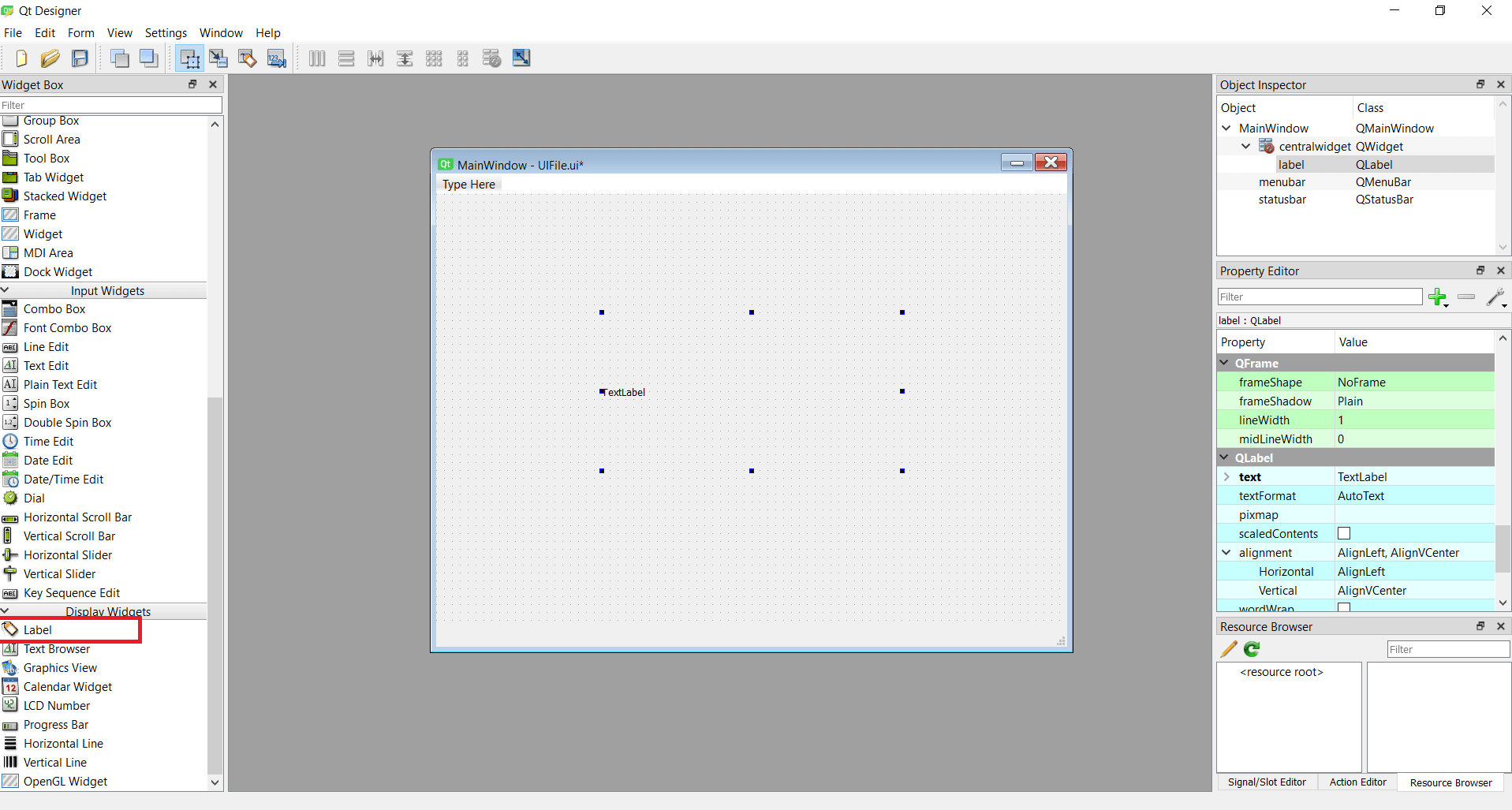 MainWindow with a single QLabel added
Next, with the Label selected, look in the right hand QLabel properties panel for the pixmap property (scroll down to the blue region). From the property editor dropdown select "Choose File…" and select an image file to insert.
As you can see, the image is inserted, but the image is kept at its original size, cropped to the boundaries of the QLabel box. You need to resize the QLabel to be able to see the entire image.
PyQt/PySide Development Services — Stuck in development hell? I'll help you get your project focused, finished and released. Benefit from years of practical experience releasing software with Python.
In the same controls panel, click to enable scaledContents.
When scaledContents is enabled the image is resized to fit the bounding box of the QLabel widget. This shows the entire image at all times, although it does not respect the aspect ratio of the image if you resize the widget.
You can now save your UI to file (e.g. as mainwindow.ui).
To view the resulting UI, we can use the standard application template below. This loads the .ui file we've created (mainwindow.ui), creates the window and starts up the application. For more on designing UIs with Qt Designer, see our guide to Qt Designer GUI layout.
import sys
from PyQt6 import QtWidgets, uic

app = QtWidgets.QApplication(sys.argv)

window = uic.loadUi("mainwindow.ui")
window.show()
app.exec()
Running the above code will create a window, with the image displayed in the middle.
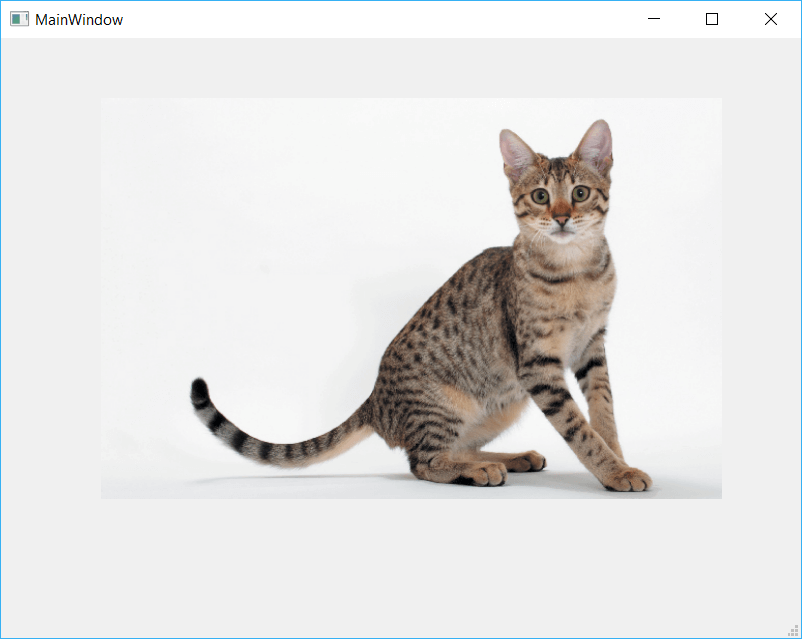 QtDesigner application showing a Cat
Displaying Images Using Python Code with QLabel and QPixmap
Instead of using Qt Designer, you might also want to show an image in your PyQt6 application through code. As before we use a QLabel widget and add a pixmap image to it. This is done by creating a QPixmap object and passing it to the QLabel method .setPixmap(). The full code is shown below.
- PyQt6
- PySide6
- PyQt5
- PySide2
import sys
from PyQt6.QtGui import QPixmap
from PyQt6.QtWidgets import QMainWindow, QApplication, QLabel

class MainWindow(QMainWindow):

    def __init__(self):
        super().__init__()
        self.title = "Image Viewer"
        self.setWindowTitle(self.title)

        label = QLabel(self)
        pixmap = QPixmap('cat.jpg')
        label.setPixmap(pixmap)
        self.setCentralWidget(label)
        self.resize(pixmap.width(), pixmap.height())


app = QApplication(sys.argv)
w = MainWindow()
w.show()
sys.exit(app.exec())
import sys
from PySide6.QtGui import QPixmap
from PySide6.QtWidgets import QMainWindow, QApplication, QLabel

class MainWindow(QMainWindow):

    def __init__(self):
        super().__init__()
        self.title = "Image Viewer"
        self.setWindowTitle(self.title)

        label = QLabel(self)
        pixmap = QPixmap('cat.jpg')
        label.setPixmap(pixmap)
        self.setCentralWidget(label)
        self.resize(pixmap.width(), pixmap.height())


app = QApplication(sys.argv)
w = MainWindow()
w.show()
sys.exit(app.exec())
import sys
from PyQt5.QtGui import QPixmap
from PyQt5.QtWidgets import QMainWindow, QApplication, QLabel

class MainWindow(QMainWindow):

    def __init__(self):
        super().__init__()
        self.title = "Image Viewer"
        self.setWindowTitle(self.title)

        label = QLabel(self)
        pixmap = QPixmap('cat.jpg')
        label.setPixmap(pixmap)
        self.setCentralWidget(label)
        self.resize(pixmap.width(), pixmap.height())


app = QApplication(sys.argv)
w = MainWindow()
w.show()
sys.exit(app.exec_())
import sys
from PySide2.QtGui import QPixmap
from PySide2.QtWidgets import QMainWindow, QApplication, QLabel

class MainWindow(QMainWindow):

    def __init__(self):
        super().__init__()
        self.title = "Image Viewer"
        self.setWindowTitle(self.title)

        label = QLabel(self)
        pixmap = QPixmap('cat.jpg')
        label.setPixmap(pixmap)
        self.setCentralWidget(label)
        self.resize(pixmap.width(), pixmap.height())


app = QApplication(sys.argv)
w = MainWindow()
w.show()
sys.exit(app.exec_())
The block of code below shows the process of creating the QLabel, creating a QPixmap object from our file cat.jpg (passed as a file path), setting this QPixmap onto the QLabel with .setPixmap() and then finally resizing the window to fit the image.
label = QLabel(self)
pixmap = QPixmap('cat.jpg')
label.setPixmap(pixmap)
self.setCentralWidget(label)
self.resize(pixmap.width(), pixmap.height())
Launching this code will show a window with the cat photo displayed and the window sized to the size of the image.
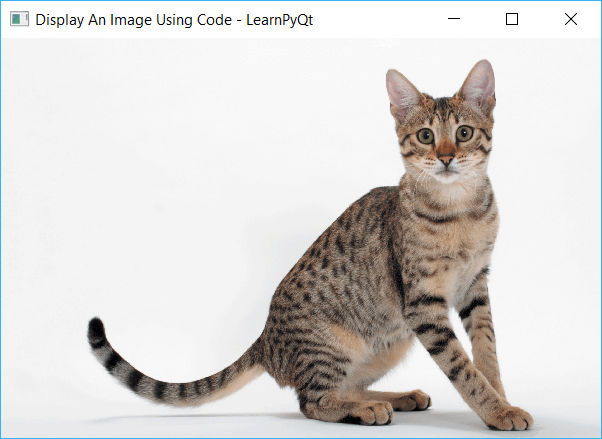 QMainWindow with Cat image displayed
Scaling Images in PyQt6 with setScaledContents
Just as in Qt Designer, you can call .setScaledContents(True) on your QLabel image to enable scaled mode, which resizes the image to fit the available space. This is useful when you want the displayed image to automatically adapt to the size of the label widget.
label = QLabel(self)
pixmap = QPixmap('cat.jpg')
label.setPixmap(pixmap)
label.setScaledContents(True)
self.setCentralWidget(label)
self.resize(pixmap.width(), pixmap.height())
Notice that you set the scaled state on the QLabel widget and not the image pixmap itself.
Conclusion
In this quick tutorial we've covered how to display images in your PyQt6 applications using QLabel and QPixmap. We walked through two approaches: using Qt Designer to visually add images to your UI, and writing Python code to programmatically load and display images with QPixmap. Both methods rely on QLabel as the display widget and QPixmap to handle the image data, giving you a straightforward way to enhance your Python GUI applications with images. You also learned how to use setScaledContents to automatically scale images to fit the label widget.
For more advanced image and graphics work, take a look at our tutorial on bitmap graphics in PyQt6 or explore other PyQt6 widgets to build richer interfaces.